
flowprofiler® blogs and news
 How to Build Team Resilience: 10 Practical Strategies for Resilient Teams Gallery
How to Build Team Resilience: 10 Practical Strategies for Resilient Teams
Agile Leadership, Blog, flowprofiler®, leadership, Personal Excellence, Positive Psychology, Professional Development, Psychometric Assessments, Psychometrics, resilienceflow®, Self-Esteem, The resilience advantage
How to Build Team Resilience: 10 Practical Strategies for Resilient Teams
A resilient team is not simply a collection of resilient individuals. You can put capable, optimistic and determined people together and still create a team that struggles when priori ties change, pressure increases or something goes wrong. Equally, a team can contain very different people and still respond remarkably well to adversity because they know how to communicate, coordinate, adapt, challenge, support one another and learn. That matters. Research increasingly treats team [...]
 10 Adaptive Leadership Strategies for Navigating Change at Work Gallery
10 Adaptive Leadership Strategies for Navigating Change at Work
Agile Leadership, Blog, Emotional Intelligence, eqflow®, flowprofiler®, leadership, Personal Excellence, Positive Psychology, Psychometric Assessments, Psychometrics, Research and Science, Work culture
10 Adaptive Leadership Strategies for Navigating Change at Work
Change is relatively straightforward when the problem is understood and somebody already knows how to solve it. Replace the faulty equipment. Update the procedure. Install the software. Teach someone the missing skill. Leadership becomes harder when the problem itself is unclear, the old solution no longer works, or people need to change how they think, work or behave. These are the situations where adaptive leadership becomes especially useful. Adaptive Leadership, developed [...]
 Workplace Resilience: What It Is, Why It Matters and How the Research Evolved Gallery
Workplace Resilience: What It Is, Why It Matters and How the Research Evolved
Agile Leadership, Blog, flowprofiler®, leadership, Personal Excellence, Positive Psychology, Psychometric Assessments, Research and Science, resilienceflow®, The resilience advantage, Work culture
Workplace Resilience: What It Is, Why It Matters and How the Research Evolved
What Is Workplace Resilience? Workplace resilience describes how people respond and adapt when they face adversity, change, setbacks, uncertainty or sustained challenge at work. It is often described simply as the ability to “bounce back”. That captures part of the idea, but modern resilience research is more nuanced. Resilience is increasingly understood as something dynamic rather than a fixed personal trait. It can involve the resources, behaviours and processes that help people [...]
Emotional Intelligence in the Workplace: How It Shapes Culture and Behaviour
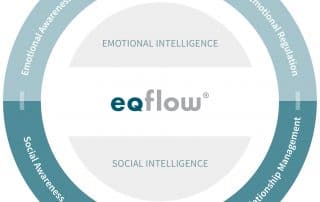
What Is Emotional Intelligence in the Workplace? Emotional intelligence in the workplace refers broadly to the capabilities involved in recognising and understanding emotions, managing our own responses and responding effectively to other people. There is no single model of emotional intelligence. Different approaches emphasise different things. Some treat emotional intelligence primarily as a set of emotional abilities, while others focus more broadly on behaviours, traits or competencies associated with emotional effectiveness. [...]

Grit vs Resilience: What Is the Difference?
Grit and resilience are related, but they are not the same thing. Grit is generally associated with sustained effort and commitment towards long term goals. Resilience is broader. It concerns how effectively someone adapts when they experience adversity, setbacks, change or significant challenge. The two can overlap. A resilient person may need perseverance to continue after a setback. A gritty person may need resilience when progress towards an important goal becomes difficult. [...]

A history of Emotional Intelligence
Where Did Emotional Intelligence Come From? Emotional intelligence did not begin with one researcher, one theory or one book. Ideas about the relationship between emotion, judgement and effective social behaviour existed long before psychologists began using the term emotional intelligence. Recent historical research has traced ideas resembling aspects of modern emotional intelligence through literature, philosophy and early psychology well before the twentieth century. These earlier ideas are better understood as precursors [...]
 How SMEs Can Become an Employer of Choice and Attract People Who Want to Stay Gallery
How SMEs Can Become an Employer of Choice and Attract People Who Want to Stay
Agile Leadership, Blog, Emotional Intelligence, eqflow®, flowprofiler®, motivationflow®, Personal Excellence, Professional Development, Psychometric Assessments, resilienceflow®, The Motivation Advantage, The resilience advantage, Uncategorized, Well-being, Work culture
How SMEs Can Become an Employer of Choice and Attract People Who Want to Stay
Recruiting good people is hard. Recruiting good people who genuinely want the role, understand what they are joining and still want to be there a year later can be harder still. For small and medium sized organisations, every appointment matters. A poor hiring decision does not disappear quietly into a workforce of thousands. It can affect customers, workload, culture, management time and the performance of an entire team. This is one [...]
Does Low Self-Esteem Demonstrate Humility?
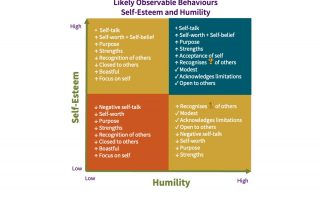
No. Low self-esteem and humility are not the same thing. They can sometimes look similar from the outside. Someone who rarely talks about their achievements, avoids drawing attention to themselves or quickly gives credit to others might be described as humble. But the reason behind the behaviour matters. Humility involves seeing yourself with reasonable accuracy, recognising both strengths and limitations without needing to feel superior to other people. Low self-esteem involves [...]



Behavioural Hiring: How Structured Behavioural Interviews Improve Selection
What Is Behavioural Hiring? Behavioural hiring is an approach to recruitment that considers the workplace behaviours required for success in a role alongside experience, qualifications and technical capability. It does not mean searching for a particular personality type. Nor does it mean trying to predict exactly how somebody will behave in every future situation. Instead, the aim is to define the behaviours that matter for the role and gather relevant evidence [...]